
Embark on a journey through the world of TV wall design, where creativity meets functionality to transform your living space. From sleek floating shelves to elegant built-in cabinets, discover the perfect design to elevate your entertainment area.
Delve into the realm of materials, lighting considerations, and cable management solutions to curate a TV wall that not only captivates visually but also enhances your viewing experience.
Types of TV Wall Designs

When it comes to designing a TV wall, there are several options to consider. Each type of design has its own unique characteristics, pros, and cons that cater to different tastes and needs.
Floating Shelves
Floating shelves are a popular choice for a modern and minimalist look. They create a sleek and clean aesthetic by appearing to "float" on the wall without any visible support.
- Pros: Adds a contemporary feel, versatile in terms of placement and arrangement, ideal for small spaces.
- Cons: Limited weight capacity, may require frequent dusting and maintenance.
Built-in Cabinets
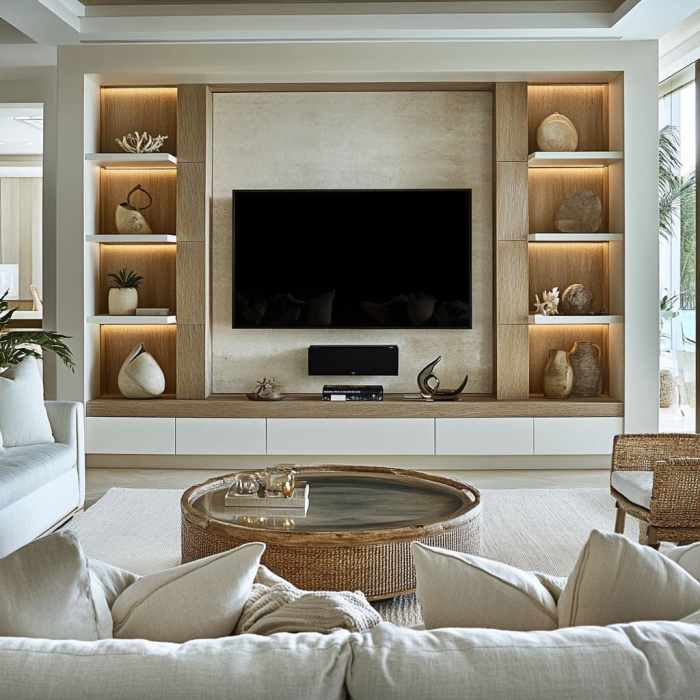
Built-in cabinets offer a seamless and customized look as they are designed to fit the specific dimensions of the space. They provide ample storage for electronics, accessories, and other items.
- Pros: Maximizes storage, hides cables and clutter, enhances the overall decor.
- Cons: Expensive to install, less flexibility for future changes, may require professional installation.
Gallery Walls
Gallery walls involve arranging a collection of artwork, photos, or decorative items around the TV to create a visually appealing focal point. This design adds personality and character to the space.
- Pros: Allows for personalization, easy to update and change, creates a dynamic and eclectic look.
- Cons: Requires careful planning for layout, can appear cluttered if not curated properly, may compete with the TV for attention.
Entertainment Centers
Entertainment centers are comprehensive units that house the TV, media components, and display items in one cohesive structure. They are often the focal point of the room.
- Pros: Provides ample storage and display space, organizes electronics and accessories, creates a cohesive look.
- Cons: Takes up a significant amount of space, can be bulky and visually heavy, may limit flexibility in furniture arrangement.
Materials for TV Wall Designs
When it comes to designing a TV wall, the choice of materials plays a crucial role in determining the overall look and feel of the space. Different materials can create varying aesthetics and impact the style of the room. Here are some commonly used materials for TV wall designs:
Wood
Wood is a popular choice for TV wall designs due to its warmth and versatility. It can add a natural and cozy feel to the room, making it perfect for creating a rustic or traditional look. Wood can be stained or painted in different colors to match the existing decor.
Metal
Metal is a sleek and modern choice for TV wall designs. It can give a contemporary and industrial vibe to the space. Metal finishes such as chrome, stainless steel, or brass can add a touch of sophistication and elegance to the room.
Glass
Glass is a stylish and elegant material for TV wall designs. It can create a sense of openness and airiness in the room, making it ideal for small spaces. Glass shelves or panels can reflect light and make the room appear brighter and more spacious.
Stone
Stone is a luxurious and timeless material for TV wall designs
Choose materials that complement the existing furniture, color scheme, and theme of the space. Whether you prefer a cozy and rustic look with wood or a sleek and modern feel with metal, the choice of materials can significantly impact the design of your TV wall.
Lighting Considerations for TV Walls
Lighting plays a crucial role in enhancing the overall design and ambiance of a TV wall. Proper lighting can highlight the focal point, create a cozy atmosphere, and even set the mood for different occasions.
Types of Lighting Options
- Recessed Lighting: Recessed lights are installed into the ceiling or wall, providing a sleek and modern look. They can be positioned to illuminate the TV area without creating glare on the screen.
- LED Strips: LED strips are a popular choice for adding subtle backlighting behind the TV. They come in various colors and can be dimmed to create different lighting effects.
- Wall Sconces: Wall sconces are decorative light fixtures that can be mounted on either side of the TV to add a stylish touch. They provide indirect lighting and contribute to the overall aesthetic of the space.
Tips for Incorporating Lighting
- Consider the Placement: Place lights strategically to avoid glare on the TV screen while still illuminating the surrounding area effectively.
- Choose Dimmable Options: Opt for dimmable lights to adjust the brightness according to your needs and create different moods for movie nights or gatherings.
- Layer the Lighting: Combine different light sources, such as overhead lights, wall sconces, and LED strips, to create depth and dimension in the room.
- Use Smart Lighting Controls: Invest in smart lighting systems that allow you to control the lights remotely or set up automated lighting schedules for convenience.
Cable Management Solutions
When setting up a TV wall, one of the most important aspects to consider is cable management. Not only does it contribute to the overall aesthetics of the space, but it also plays a crucial role in ensuring safety by reducing the risk of tripping hazards or electrical issues.
Hiding Cables Behind the Wall
One popular method for managing cables in a TV wall setup is to hide them behind the wall. This involves running the cables through the wall cavity to keep them out of sight and create a clean, seamless look. It is essential to consult a professional to ensure proper installation and safety.
Using Cable Covers
Cable covers are another effective solution for concealing and organizing cables along the surface of the wall. These covers come in various colors and sizes to match the decor and can be easily mounted or painted over to blend in seamlessly with the wall.
Incorporating Cables into the Design
For a more creative approach, you can incorporate cables into the design of the TV wall. This can be done by using decorative cable clips, cable trays, or even integrating the cables into the shelving or furniture surrounding the TV.
This not only adds a unique visual element but also helps keep the cables organized and easily accessible.
Remember, effective cable management is not just about aesthetics—it also ensures a safer and more organized living space. By choosing the right cable management solution for your TV wall, you can enjoy a clutter-free environment while maintaining a stylish and functional setup.
Ultimate Conclusion
As we conclude our exploration of TV wall designs, remember that the right design can truly redefine the ambiance of your room. Whether you opt for a minimalist approach or a more elaborate setup, let your TV wall reflect your style and personality.
Helpful Answers
How do I choose the right TV wall design for my space?
Consider the size of the room, the existing decor, and your personal style preferences to select a TV wall design that complements the space.
What are the best materials for a modern TV wall design?
Materials like wood and metal are popular for modern TV wall designs due to their sleek and contemporary look.
Why is cable management important for a TV wall setup?
Effective cable management not only enhances the aesthetics of your TV wall but also ensures safety by preventing tripping hazards.